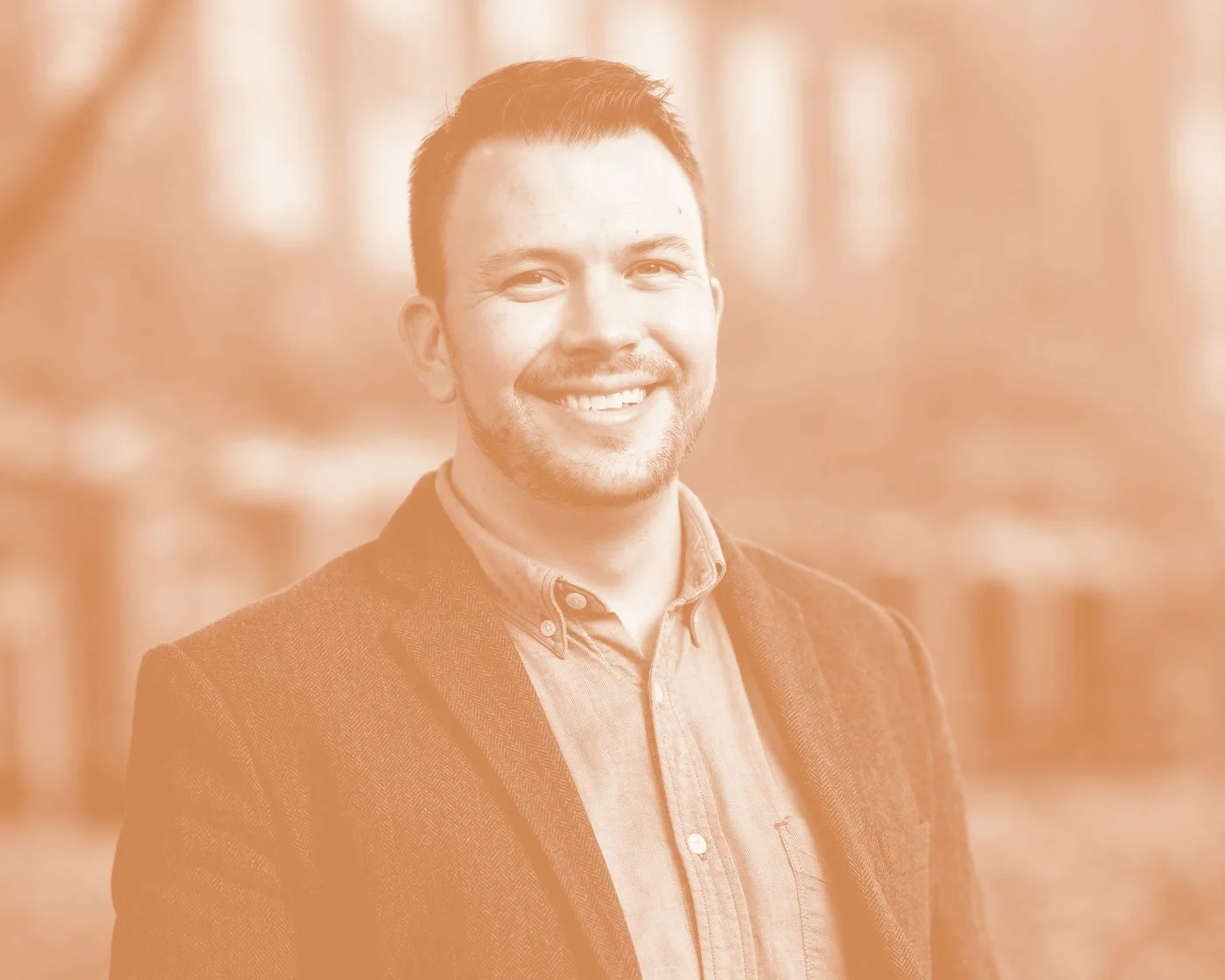
Francisco Gallegos
he/him • assistant professor of philosophy, Wake Forest University • Winston-Salem, NC
2022 Climate Wayfinding @ Omega alum
“When I found Climate Wayfinding, I was really struggling with the disconnect between the urgency of the climate emergency we are in and my inability to talk about it in social spaces without being labeled ‘a really big bummer.’ I needed help learning how to talk about these emotions in productive and nourishing ways, without being naive or dismissive. Otherwise, I feared that every conversation would keep ending with, ‘We are all doomed,’ which is actually not what the science says. The solutions are out there. That’s the good news. But people need the emotional tools to even have the energy and clarity to act on them.”
Sometimes an email can feel like a smile from the universe. That’s how Francisco felt when, during a period of deep discouragement at the enormity of the climate crisis and his own ability to make a difference, he opened The All We Can Save Project’s monthly newsletter and saw that applications were open for the 2022 Climate Wayfinding workshop at the Omega Institute. He initially wasn’t sure if the retreat environment – complete with movement and energetic practices like yoga and reiki – was for him. But, finding a space apart from the busyness and obligations of daily life where he could work through climate emotions alongside others asking the same questions felt rare and precious. He applied with an open mind, hoping to gain tangible how-tos to navigate climate emotions with his students at Wake Forest, where he teaches philosophy.
“The workshop really showed me that big feelings are best held in relationships with others. Deep emotional work is actually a very social thing, if you can learn how to move through feelings with other people and be honest and vulnerable. A lot of my academic work is around the power of moods, and how important they are in shaping what human beings view as possible in the world. Thanks to the structure of the workshop, I was able to receive the benefits of the environment, and learn how to create those social containers myself – for my students, my personal relationships, and myself.” He realized how much he missed his yoga practice, too.
Franscisco’s participation was timely; that semester, he was teaching a course in environmental ethics, which included a unit on climate emotions. He now had a framework to use – an antidote to ward off the “hide under the covers” gloom he was accustomed to feeling when he approached the topic. He started having class outside more, tinkering with the format of his classes to inject more nourishment. He has also found his partnerships with colleagues to be more generative after using strategies from Climate Wayfinding. For example, identifying “accelerators” – tackling a big, complex problem by starting with actions that can have the greatest structural impact, rather than just barreling forward – helped his colleagues stay focused and energized rather than slipping into overwhelm.
And, he’s having fun. “This experience showed me that I am my most impactful when I lean in on the climate solutions that exist in that sweet spot where my interests, skills, and joy overlap. And that joy actually attracts other people to the work, and now I’m doing good for the climate in community with others. This approach has unlocked energy I was previously wasting on ‘should-ing.’ It feels so much more sustainable.”