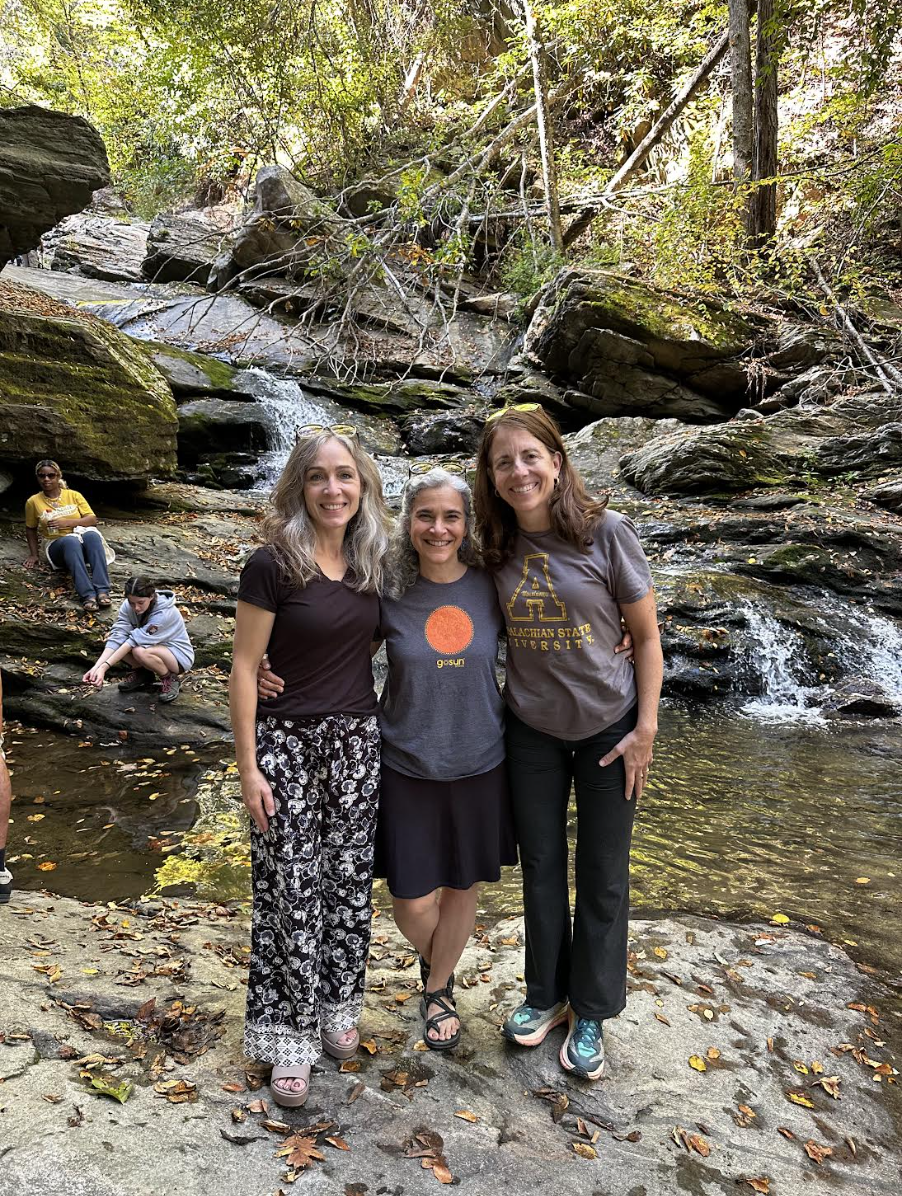
Heidi Campbell, Laura England, and Carla Ramsdell
she/her • various faculty and staff roles, Appalachian State University • Boone, NC
2024 Climate Wayfinding facilitators
“We couldn’t have picked a better facilitator trio as far as leaning into each other’s strengths. It was magical the way it worked out.”

When Heidi Campbell, Laura England, and Carla Ramsdell first set out to bring Climate Wayfinding to Appalachian State University, their plan was simple: gather 15 students for a traditional, student-only cohort offered over six weeks. But as word spread, something surprising happened: Faculty and staff began reaching out with genuine interest in taking part, while student applications arrived more slowly than expected.
At first, the team hesitated to widen the participant pool. “Will students be open and vulnerable in the midst of faculty?” Heidi wondered. Still, they chose to take a chance and extend the invitation.
The result? A dynamic, diverse cohort of eight students and five faculty and staff members, ranging in age from their twenties to their fifties. What began as a student-focused initiative evolved into something far more meaningful: an intergenerational space for learning, reflection, and climate engagement.
Students appreciated seeing faculty as fully human—grappling with the same emotions and questions around the climate crisis as they are. Faculty, in turn, were energized by what Laura described as the “remarkable level of sophistication” and self-awareness among the younger participants.
“It broke this facilitator-student dichotomy,” Carla explains. “There were other adults in the room who weren’t the facilitators. It opened a lot.”
This intergenerational mix created a space for deep mutual learning. One particularly powerful moment came when a student expressed gratitude for seeing Carla, the oldest member of the group, still so creatively engaged in climate work—challenging the narrative that older generations have left the climate crisis for younger people to solve alone.
The facilitators credit much of the program’s success to the diversity of their own backgrounds and complementary strengths. Laura, director of Academic Sustainability Initiatives, brought the vision, organization, and determination that made the project possible. Carla, practitioner-in-residence in the Department of Physics and Astronomy, contributed both subject matter expertise and an infectious enthusiasm for climate solutions. And Heidi, a licensed therapist, offered the emotional wisdom essential for holding space around climate grief, anxiety, and uncertainty. Her training was especially helpful for creating the kind of container where being vulnerable felt safe. “Having someone with Heidi’s background sets the ambiance and tone early on,” Laura noted.
The trio found the experience so transformative that they ran another program the following fall—this time as a weekend intensive with 24 participants. (Watch Carla’s sweet video recap here.) Even with ample student applicants, they deliberately preserved the age diversity. The decision reflected what they had come to understand: real magic lives in the spaces between generations, where genuine connection, deeper understanding, and collective courage can take root.
“The community of it meant so much to me,” Heidi reflects. “I could not have asked for a better experience.”